Listen for the real priority
A successful brief identifies what matters most: a memorable arrival, a confident stage, a welcoming room, a refined workplace, or continuity across several event zones.
About us
Bloomline Events brings creative floral thinking and practical event production into the same conversation.
Why Bloomline
Bloomline Events is centered on a straightforward idea: the visual ambition of an event and the practical realities of producing it should inform each other from the start. Floral direction becomes stronger when it responds to the room, the event purpose, the arrival experience, the guest journey, and the time available to install and remove the work.
That approach keeps the conversation grounded. A bold concept still needs appropriate mechanics. A refined tablescape still needs to protect guest views. A lobby arrangement still needs to fit the desk, the light, and the building’s delivery routine. Bloomline looks at the complete situation so the design can feel expressive without becoming disconnected from the event around it.
The craft
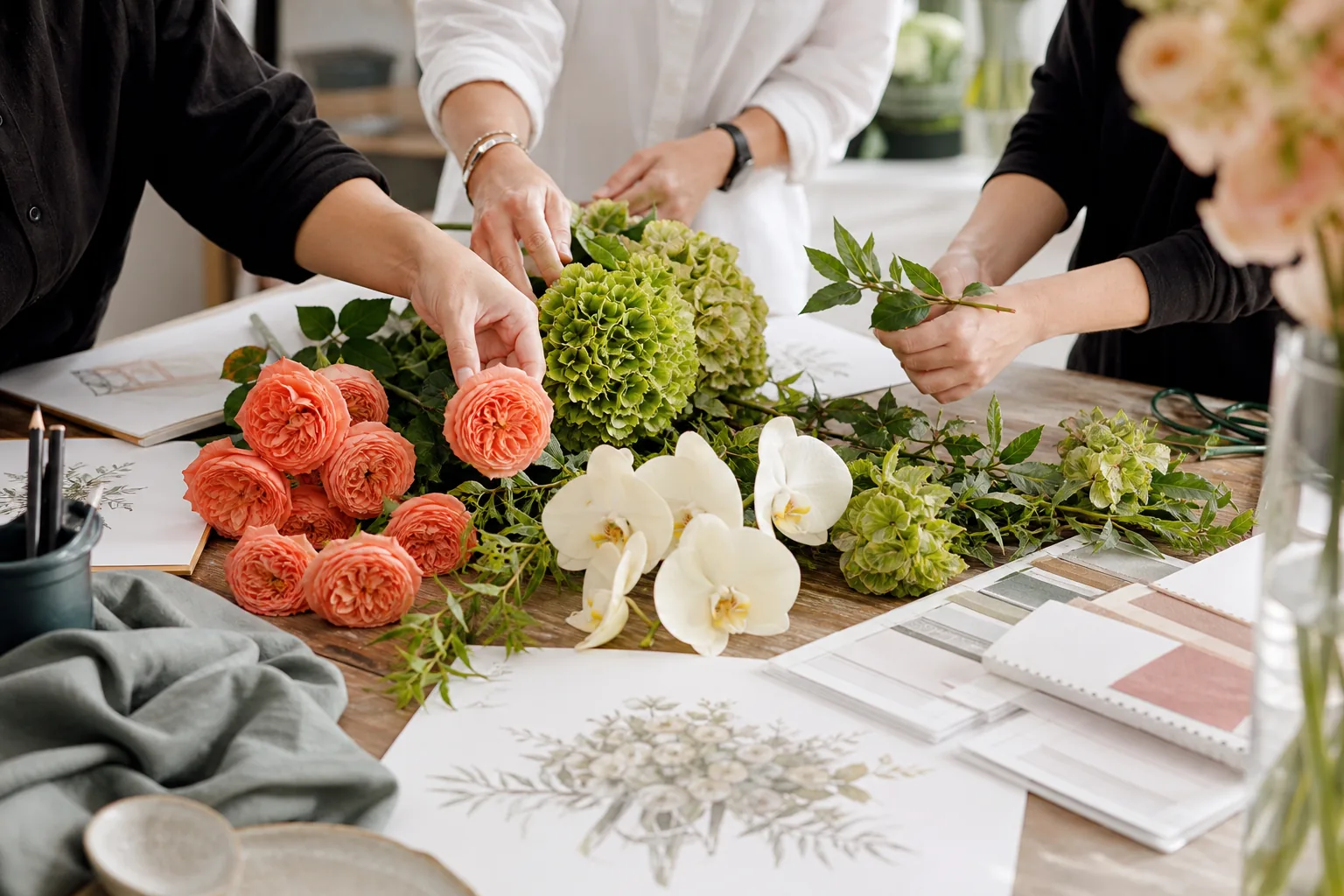
Flowers offer extraordinary variety, but more choice is not always better. A focused floral language can create stronger rhythm and a clearer relationship to the event. Bloomline considers how a palette behaves in the available light, how materials will hold through the event window, how a design reads from different distances, and where natural variation adds character.
Concept development may include floral character, foliage, vessel direction, line, density, negative space, scale, and the relationship between focal areas. The final combination depends on sourcing and confirmed scope, but the creative goal remains tied to the experience the event needs to support.
Working principles
A successful brief identifies what matters most: a memorable arrival, a confident stage, a welcoming room, a refined workplace, or continuity across several event zones.
The venue is part of the composition. Architecture, furniture, lighting, access, traffic, and sightlines help determine placement and scale.
Flowers travel through preparation, packing, transport, staging, installation, guest use, and removal. Each stage affects the final condition.
Dates, scope, sourcing, timing, and commercial terms are reviewed before a project is treated as scheduled or a specific result is promised.
Production mindset
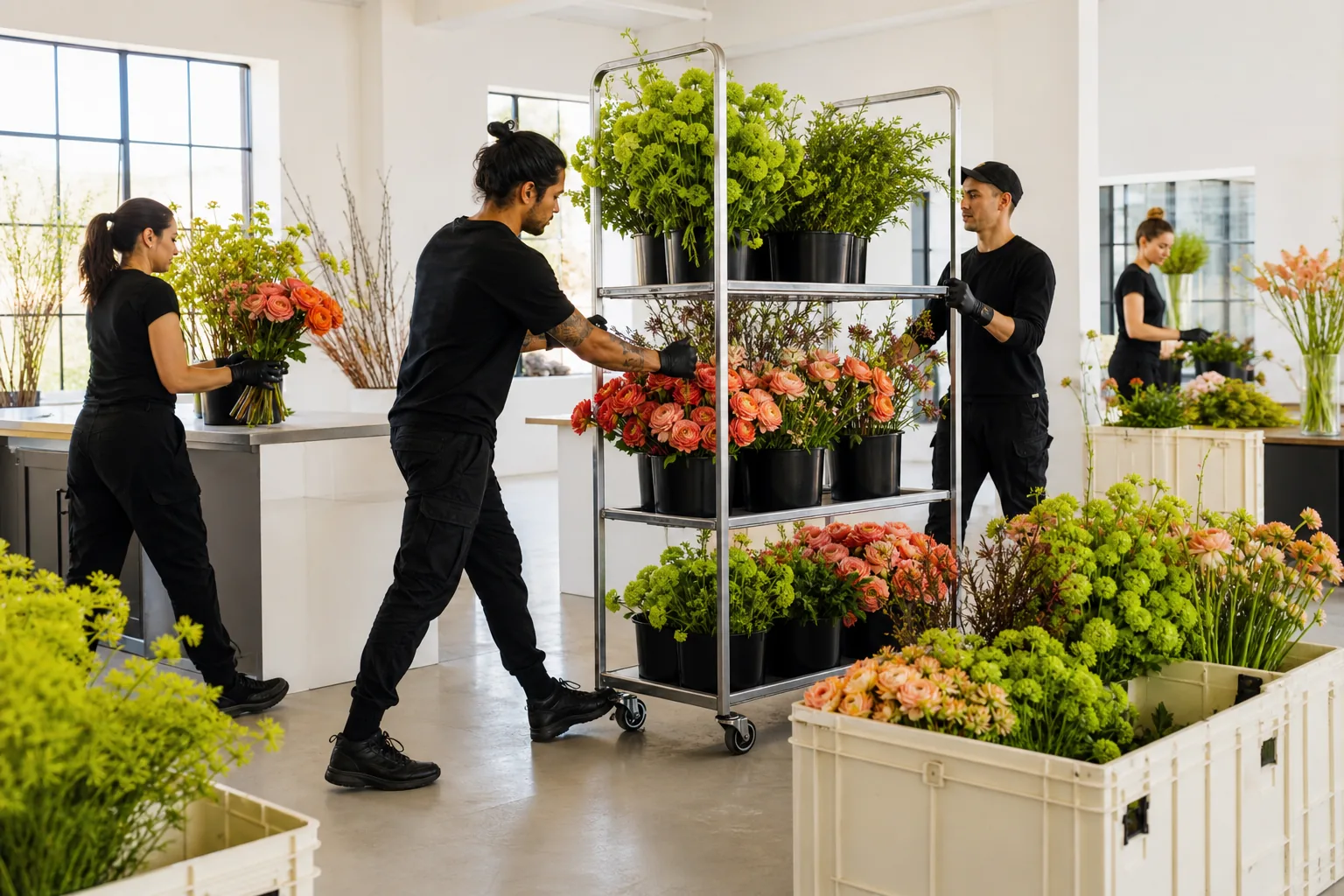
Much of event floral work happens before the venue begins to change. Stems are conditioned, vessels are prepared, mechanics are tested, placements are sequenced, arrangements are protected, and transport is organized according to the order in which the room will be built.
Bloomline’s process values that invisible work because it creates room for better decisions on site. When the project is packed and sequenced thoughtfully, attention can shift to refinement: adjusting a focal line, correcting a sightline, balancing two areas, or responding to a last venue detail without losing control of the installation.
Care also continues after the event. Breakdown and removal need the same respect for the venue, schedule, and materials as setup. Those responsibilities are discussed when they are part of the requested scope.
A strong project fit
An inquiry does not need to contain every answer. It is useful to share the event type, approximate timing, venue context, guest experience priorities, areas that may need floral treatment, and any existing palette or creative direction. If the venue has strict access, installation, attachment, or removal rules, mention those early.
Bloomline reviews each request before confirming next steps. That protects both the creative direction and the practical expectations around availability, sourcing, budget, timing, and production responsibilities.